Dubrovnik

Game of Thrones Filming Locations — Dubrovnik Walking Route

The route at a glance

  1. 1 Pile Gate — King's Landing's western entrance
  2. 2 Stradun — King's Landing main street Immediately through the inner gate
  3. 3 Onofrio's Fountain — background detail Immediately on your left as you enter from Pile Gate
  4. 4 Dominican Monastery area — side streets East end of Stradun — turn right (south) before Luža Square
  5. 5 Jesuit Stairs (St. Ignatius Church) — Cersei's Walk of Shame 10 min walk south from Luža Square — follow signs to Gundulić Square then uphill
  6. 6 Rector's Palace — Spice King's mansion (Qarth) 10 min walk back north to Bunić Square
  7. 7 Old Port — harbour and boat scenes 5 min walk east then south to the harbour
  8. 8 Bokar Fort view — Blackwater Bay backdrop 15 min walk west along the south wall base, outside the walls
  9. 9 Fort Lovrijenac — the Red Keep exterior 5 min walk west from Bokar — outside the walls near Pile Gate

Two maps on the same city

Every building on this route was built before 1550. The Jesuit Stairs came later — construction began in 1699 — but the fortifications, the Rector's Palace, the city walls, and Fort Lovrijenac predate Game of Thrones by four to five hundred years. That distinction is worth holding onto as you walk.

The show's production team chose Dubrovnik because it had the right look: a walled city on the Adriatic with genuine medieval architecture, maintained to a standard that no backlot could replicate. They filmed exterior backgrounds here across multiple seasons, using the real buildings with minimal alteration — digital effects added scale and fantasy elements, but the stone was always actual stone.

What this means in practice: every stop on this route is a real place with a real history that the show borrowed. The Jesuit Stairs are a functioning 18th-century Baroque staircase. Fort Lovrijenac has an inscription about liberty that predates the show by five centuries. The Rector's Palace housed the elected head of a functioning city-state for over four hundred years. The GoT layer is a relatively recent overlay on a much older city — interesting, worth exploring, but thinner than the historical record underneath it.

What is not on this walk

Two significant GoT locations are not reachable on foot from the old town:

Trsteno Arboretum — the garden sequences used for Highgarden (seasons 3–5) are filmed at a 15th-century arboretum 18 kilometres north of Dubrovnik, near the village of Trsteno. It is a separate day trip, accessible by local bus. The arboretum itself is a genuine historic garden and worth visiting on its own terms.

Lokrum Island — used for Qarth harbour scenes in season 2, Lokrum is a forested island 600 metres from the Old Port, reachable by ferry in about 15 minutes. It is a nature reserve, pleasant for swimming and walking. Ferries run from the Old Port regularly in season. It is not part of this walk but is a natural add-on if you have the afternoon.

Pile Gate — King's Landing's western entrance

The Pile Gate is the natural starting point for this route — not only because it is the main western entrance to the old town, but because the gate itself appeared in Game of Thrones. The double-arch structure, the stone bridge over the former moat, and the surrounding wall section all featured in King's Landing exterior shots: the approach to the city that audiences saw when characters arrived at the capital on foot from the west.

The gate architecture is exactly as it appears in the show: the outer Gothic arch from 1537, the inner 15th-century gate, and above the inner arch the niche with a figure of St. Blaise — Dubrovnik's patron saint, rather than any GoT equivalent. Production used the gate essentially as-is, occasionally with digital additions to the walls above.

Walk through both arches slowly and look at the structure. The defensive logic — two gates in sequence, creating an enclosed trap between them — is the kind of detail the show's production design team leaned into heavily. The same spatial compression you see in the show is real.
Immediately through the inner gate

Stradun — King's Landing main street

The Stradun — also called Placa — served as the visual basis for King's Landing's streets in multiple seasons. The Baroque uniformity of the buildings on either side, the wide marble surface, and the Bell Tower at the far end provided a recognisable urban backdrop for crowd scenes and processions.

What the show added digitally was scale: the Dubrovnik Stradun is roughly 300 metres long and perhaps 15 metres wide — impressive as a real street, but not the vast boulevard of a fictional capital city. Visual effects expanded it. The buildings, the stone surface, and the general proportions are authentic; the density of the crowd behind the characters was enhanced.

Walk the length of the Stradun east, looking for the details that appear in the show: the side-street entrances branching off left and right (the dark alleys that gave King's Landing its texture), the Bell Tower landmark at the Luža Square end, and the consistent height and character of the building frontages. The Franciscan Monastery is on your left — its cloister played no GoT role, but the building's exterior contributes to the streetscape.

South old town — side streets off the main axis

Immediately on your left as you enter from Pile Gate

Onofrio's Fountain — background detail

The large circular fountain built in 1438 appears in the background of several King's Landing scenes — the kind of incidental set dressing that audiences who know the show can spot but is not a specific identified filming point. The fountain's 16 mask-heads and the dome above them have a distinctly medieval feel that suited the show's visual grammar.

The location is relevant here primarily as context: this is the area immediately inside the main city gate, and the spatial relationship between the gate, the fountain, and the Stradun opening ahead was used in multiple arrival and departure sequences. When you are standing here deciding which direction to walk, you are standing in roughly the same position as characters in several scenes.

The fountain still runs from the 1438 aqueduct. The water from the masks is drinkable — fill a bottle if you are doing this in summer.

East end of Stradun — turn right (south) before Luža Square

Dominican Monastery area — side streets

Before you reach Luža Square, the network of narrow streets south and east of the Stradun provided much of the textural background for King's Landing's street-level scenes. These alleys — climbing stone stairways, shuttered windows, dark passages — were ideal for sequences that needed the feel of a crowded, lived-in medieval city without the landmarks.

This area is harder to pin to specific scenes because it was used as general atmosphere rather than as an identifiable location. Walk through a few of the side streets and you will recognise the visual language of the show: the same pale limestone, the same narrow sky-strip above, the same worn stone underfoot.

Turn back toward the Stradun and continue east to Luža Square.

10 min walk south from Luža Square — follow signs to Gundulić Square then uphill

Jesuit Stairs (St. Ignatius Church) — Cersei's Walk of Shame

The Jesuit Stairs are the single most explicitly identified Game of Thrones location in Dubrovnik. The long monumental staircase leading up to the Church of St. Ignatius was used for Cersei's Walk of Shame at the end of season 5 — one of the most discussed scenes in the show's later run.

Filming took place on the stairs in October 2014. The stairs in Dubrovnik are genuinely theatrical: a wide, curved baroque staircase — inspired by the Spanish Steps in Rome and built in the early 18th century — leading up to the Church of St. Ignatius of Loyola, the largest Jesuit church in Croatia. The church itself was under construction from 1699 onward and consecrated in 1729.

In the show, the staircase exterior stood in for the approach to the Sept of Baelor. The length of the staircase, the way it frames the church above, and the texture of the limestone made it a near-perfect match for the scene's requirements.

Walk up the full length of the stairs. At the top, the terrace in front of the church gives a good elevated view south over the rooftops toward the walls and the sea. The church interior is free to enter; the Jesuit statues and ceiling fresco are worth a few minutes.

South old town approaching Jesuit Stairs
Old Port area
Old Port area

Jesuit Stairs area and south old town

10 min walk back north to Bunić Square

Rector's Palace — Spice King's mansion (Qarth)

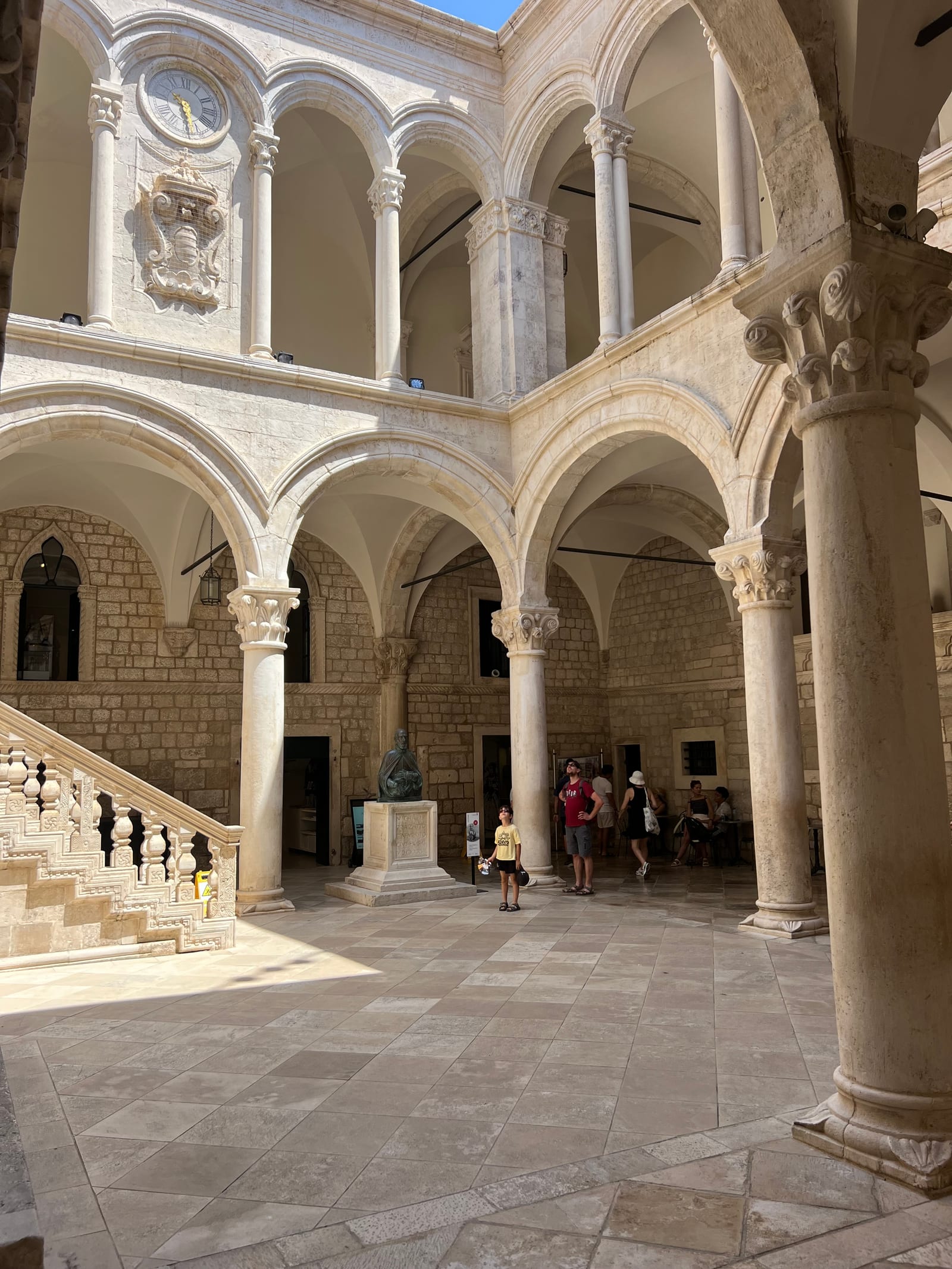
The exterior of the Rector's Palace was used in season 2 as the visual basis for the Spice King's mansion in Qarth — the wealthy trading city where Daenerys and her followers sought help early in the show. The Gothic-Renaissance arcade of the ground-floor loggia and the general character of the 15th-century façade suited the show's vision of a prosperous, architecturally sophisticated city.

The Rector's Palace is a real building with a real function: it was the administrative headquarters of the Republic of Ragusa from the 14th century until 1808, and now houses the Cultural History Museum. The Rector who lived here served one-month terms only, forbidden to leave during his term except for official duties — a designed check on individual power.

The exterior loggia arcade is free to view from the square. Entry to the museum interior is ticketed. The building's historical significance is independent of its GoT role — the show picked it because it looked right; it is worth understanding what it actually was.

5 min walk east then south to the harbour

Old Port — harbour and boat scenes

The Old Port at the south-east corner of the old town appeared in multiple boat and harbour sequences across the show's run. The enclosed harbour, the fortress tower of St. John Fortress on one side, and the view out toward the open sea provided the visual language for the port of King's Landing — where ships arrived, where fleets assembled, and where waterfront scenes played out.

The harbour is small by modern standards — the Republic of Ragusa's commercial fleet was managed from Gruž, the deeper-water port further up the coast, while the Old Port handled galley-scale vessels. The Arsenal arches on the northern wall of the harbour are where galleys were built and stored. Several of the arched openings are still visible.

From the outer breakwater looking back inland, the combination of St. John Fortress, the wall towers, and the city skyline is one of the most recognisable views in the show. Stand here for a few minutes and work out which shots you have seen.

South old town — toward the harbour

15 min walk west along the south wall base, outside the walls

Bokar Fort view — Blackwater Bay backdrop

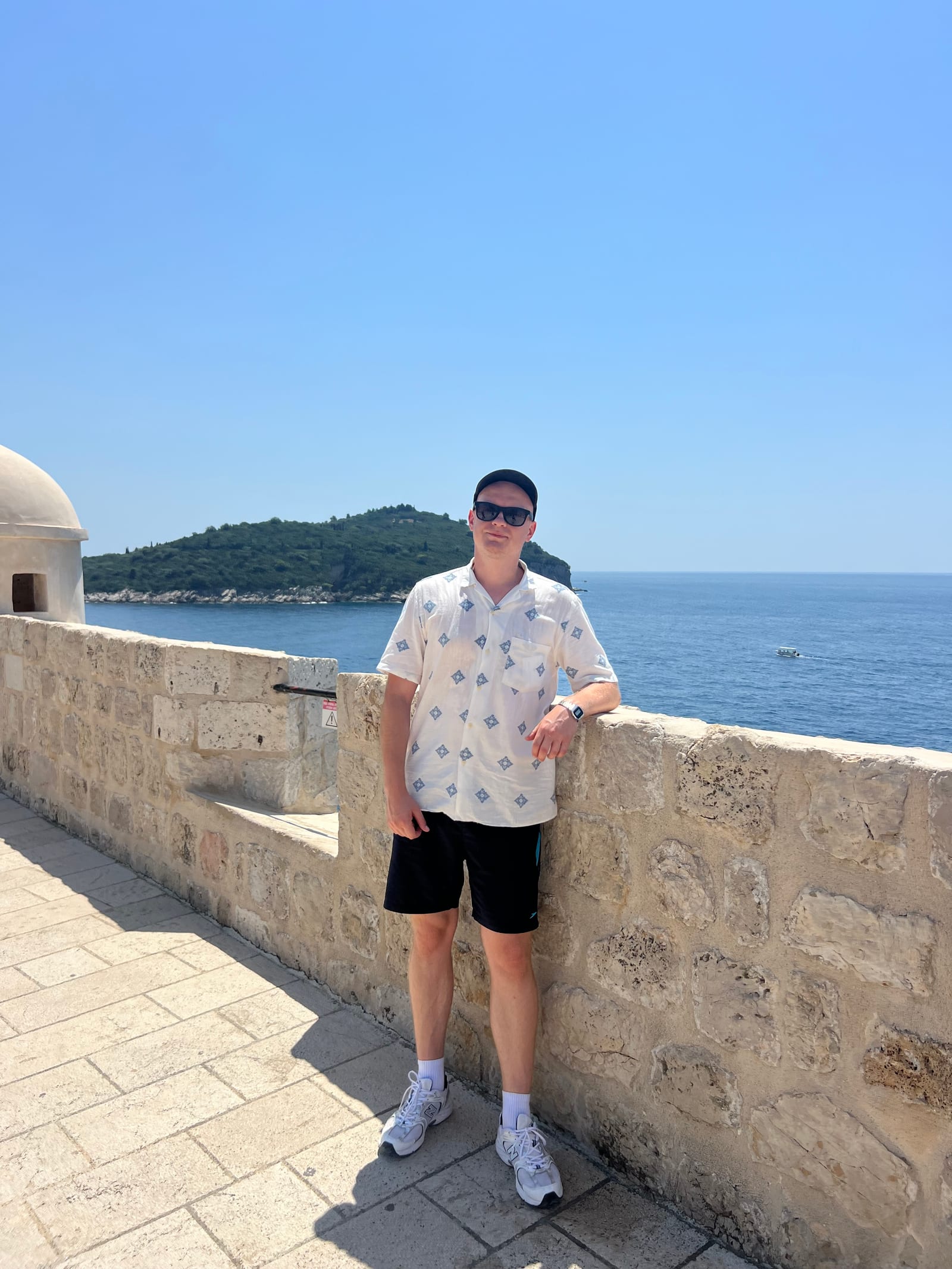
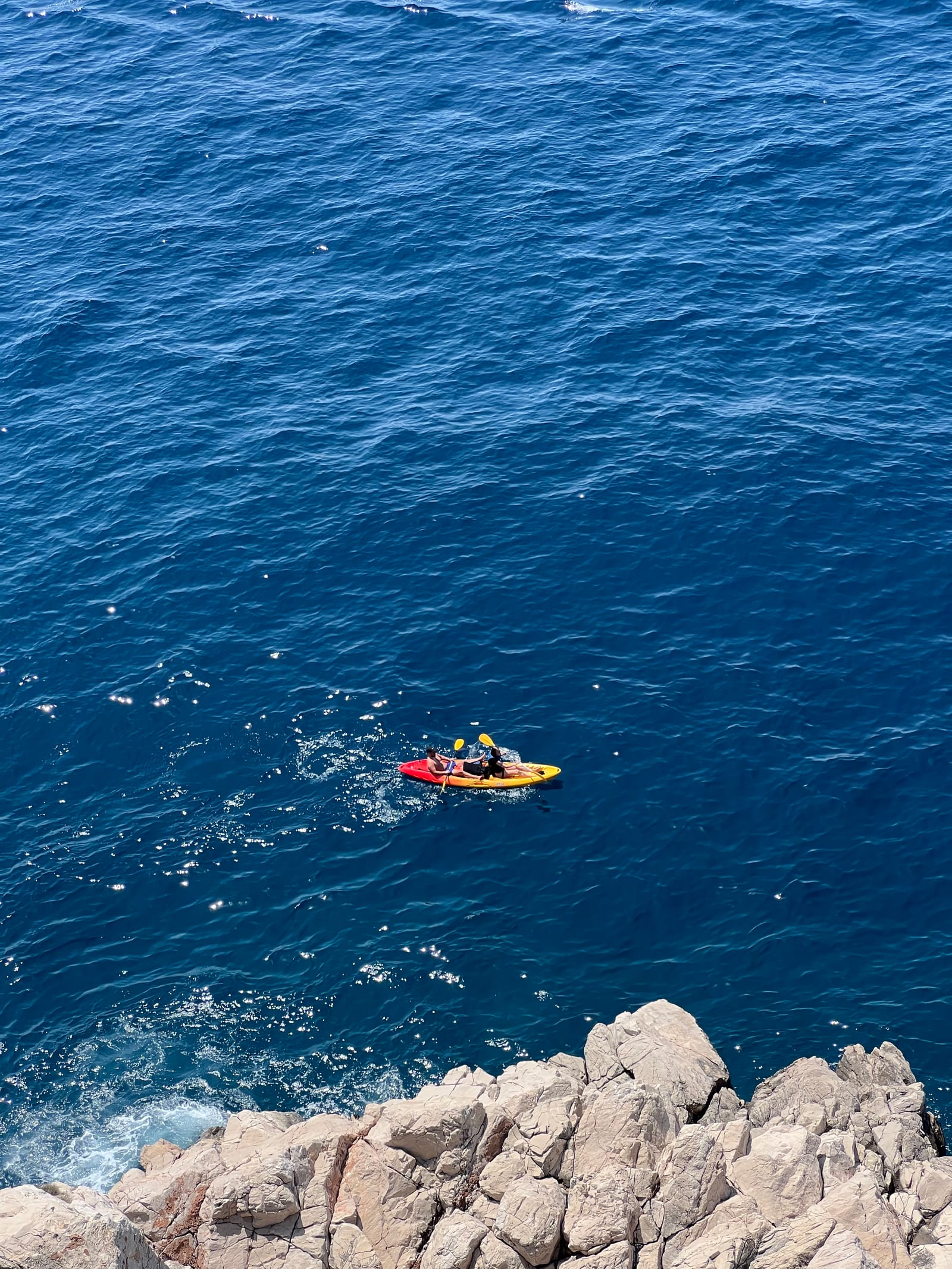
Fort Bokar sits at the south-western corner of the fortifications, a two-storey artillery fortress built between 1461 and 1463. The fortress and the sea cliff below it — with the Adriatic directly below and Lokrum Island visible in the distance — appeared as the visual backdrop for Blackwater Bay sequences in the show. The combination of steep city walls, the exposed fortress tower, and the open sea directly below makes the Dubrovnik waterfront unmistakably the model for King's Landing's southern coastline.

Bokar is not accessible from the wall circuit directly — you reach the exterior view from the path outside the walls on the south-west side, near the small beach below the fortress. The view back up at the fort from the shoreline, with the walls rising above it, is the angle that appears in the show's aerial and wide shots.

The interior of Bokar Fort is used as a seasonal events venue; access from the outside is the standard visitor experience.

5 min walk west from Bokar — outside the walls near Pile Gate

Fort Lovrijenac — the Red Keep exterior

Fort Lovrijenac stands on a 37-metre rock promontory immediately west of the Pile Gate, separated from the city walls by a narrow sea channel. It is the most dramatically positioned fortress on this route: a triangular structure on a sheer cliff, with the sea on three sides and a narrow bridge as the only access.

According to the Wikipedia article on Game of Thrones, the Walls of Dubrovnik and Fort Lovrijenac were used for King's Landing scenes throughout the show, with Lovrijenac providing the exterior profile associated with the Red Keep — the royal fortress that dominated King's Landing's skyline. The fortress's silhouette from the water, and particularly the view of it from the Pile Gate bridge, appeared in multiple exterior establishing shots.

The fortress inscription above the gate — "Non Bene Pro Toto Libertas Venditur Auro" (Liberty Cannot Be Sold for All the Gold in the World) — was placed there by the Republic of Ragusa as a reminder to each commander: the fortress must never be surrendered, regardless of the offer. It has nothing to do with Game of Thrones and is more interesting than anything in the show.

Entry is separately ticketed (around €15 as of recent guides). The upper terrace is one of the best viewpoints in Dubrovnik — looking back east to the Pile Gate and the north walls from this position, with the sea below and Lokrum Island in the distance. Allow thirty minutes.

Practical tips

Frequently asked questions

Which Game of Thrones scenes were filmed in Dubrovnik?

Dubrovnik served primarily as King's Landing for most of the show's run — the city walls and Fort Lovrijenac appeared in King's Landing exterior scenes across multiple seasons. The Jesuit Stairs were used for Cersei's Walk of Shame in season 5. The Rector's Palace and Lokrum Island were used for Qarth scenes in season 2. The Old Town walls and Stradun area appeared in various King's Landing street scenes.

Are the Game of Thrones locations real or were they purpose-built sets?

All the Dubrovnik locations are genuine historic buildings and public spaces used as exteriors. No permanent sets were built — production used the existing architecture as backdrops, sometimes with added digital elements. The Jesuit Stairs, Fort Lovrijenac, the city walls, and the Old Port are all real and all pre-date the show by centuries.

Can you enter Fort Lovrijenac?

Yes. Fort Lovrijenac is open to visitors and charges a separate entry fee (around €15 as of recent guides — check on the day). It is used as a theatre venue for the Dubrovnik Summer Festival and has hosted productions of Hamlet and A Midsummer Night's Dream. The upper terrace gives one of the best views of the Pile Gate area and the north walls.

How long was Game of Thrones filmed in Dubrovnik?

Filming in Dubrovnik spanned multiple seasons of the show — seasons 2, 3, 4, and 6 included significant Dubrovnik production. The city was used consistently as the primary exterior for King's Landing throughout the show's run, making it one of the most extensively filmed real locations in the series.

Is there a free GoT walking tour?

Several private operators run paid guided GoT walking tours from near Pile Gate daily in season. They typically last 1.5–2 hours and follow largely the same route covered here. There is no free tour. This self-guided route covers the same locations at your own pace without the group size or scheduling constraints.

What is the best time to visit Game of Thrones filming locations in Dubrovnik?

Early morning, before the organised group tours arrive at the popular spots. The Jesuit Stairs and Fort Lovrijenac are the most visited — both are significantly quieter before 9am and after 5pm. Late afternoon light on the south-facing walls and the Lovrijenac waterfront is excellent for photography.

Walk it with confidence

Walk it with confidence

Get turn-by-turn directions, offline maps, and audio guidance — plus 50+ more curated routes across Europe.